
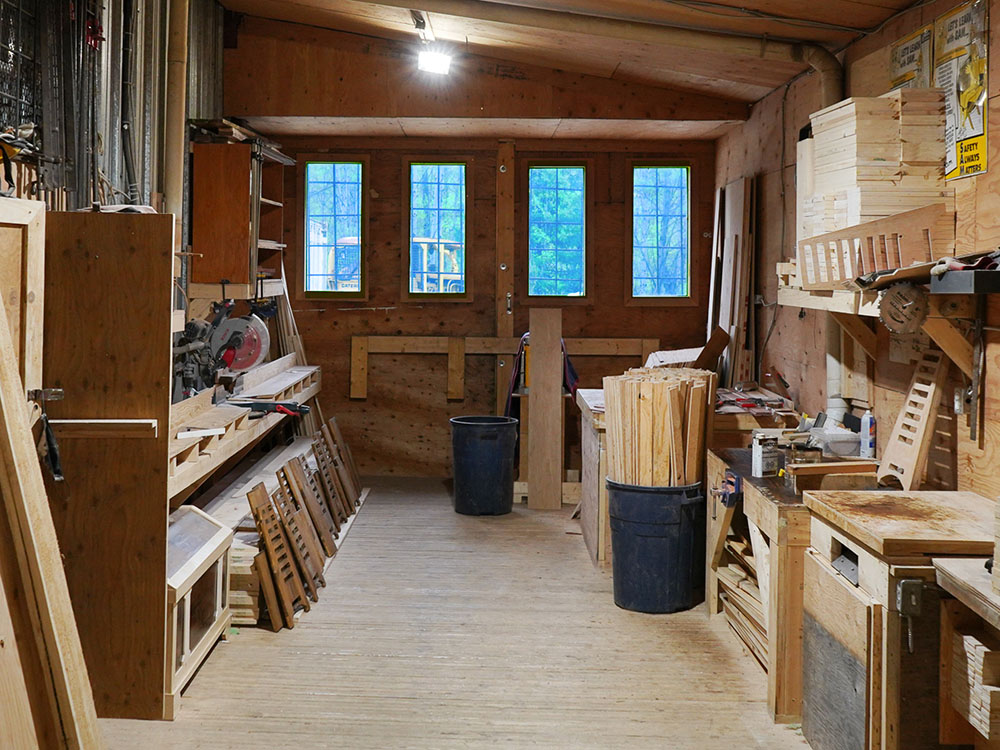
Small crate repairs often start with only a few parts on the bench: two screws, a handle block, a plug, a short slat, maybe one washer that must not disappear. Then the work shifts, a rag moves, and the smallest piece rolls into the sawdust just when the repair is ready to go back together.
A bench-edge parts rail is just a straight offcut clamped along the front or side of the work area. It does not need joinery or finish. A strip of scrap wood, a little longer than the job, gives loose parts a low wall so they stay near the repair instead of sliding off the bench.
Set the rail where your hand naturally reaches, but keep it out of the clamp path. For a crate corner repair, park screws and plugs between the rail and the work. For a small display crate, use the rail to hold matching divider pieces in the order they were dry-fitted.
The rail is most useful when it becomes part of the setup, not a rescue after the bench is already crowded. Sweep the work spot, clamp the rail, lay the parts in a row, and only then open the glue or drill the pilot holes. A pencil tick on the rail can mark left, right, front or back if the parts look similar.
At cleanup time, the same rail helps confirm nothing is missing. If the row is empty and the repaired crate is assembled, the loose hardware has not been left hiding under a sanding block or stuck to a rag.
Practical takeaway: before a small crate fix begins, clamp one narrow scrap along the bench edge and use it as a parking rail for screws, plugs and short parts that are too easy to lose.
Shop OrganizationCrate RepairsSmall Parts