
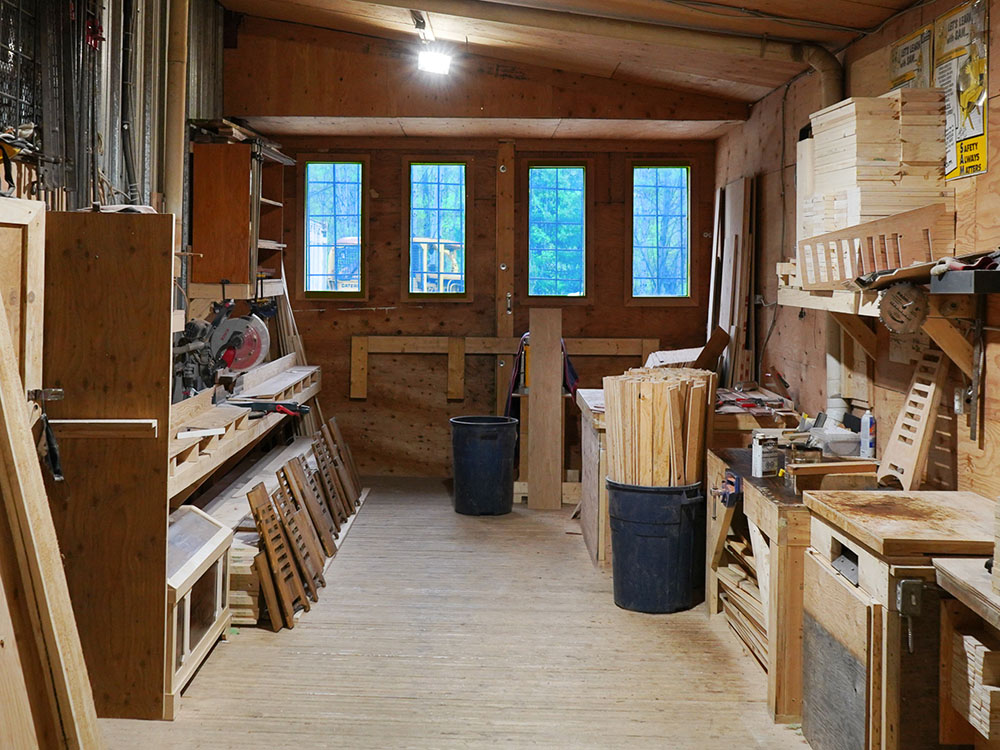
Few shop moments are as deflating as driving a nail near the end of a thin crate slat and hearing the dry tick of the wood splitting. A sharp nail point acts like a little wedge: it shoves the fibres apart along the grain, and near the end of a board there is nowhere for that pressure to go except into a crack.
The old fix takes about two seconds. Set the nail point-down on a hard surface such as the face of the hammer lying on the bench, and give the tip one light tap with another hammer. You are not flattening the nail, just taking the needle off it. A blunted point crushes a small path through the fibres instead of wedging them apart, and crushed fibres are far less likely to run out into a split.
Technique matters more than force. One tap is enough; if the point is visibly mushroomed, start with a fresh nail. Hold the nail near the head while you tap so it does not bend, and keep your fingers clear of the striking zone. If the slats are reclaimed or very dry, expect them to split more easily and test the habit on an offcut from the same board first.
Placement habits help just as much as the blunt tip. Keep nails in from the end of the slat by at least a couple of nail lengths, and stagger multiple nails so they do not all follow the same grain line. A nail driven at a slight angle near an edge often holds better and splits less than one driven dead straight at the thinnest section.
Blunting is a helper, not a licence. If a slat is very thin, already checked, or carrying a structural load, switch to a small pilot hole or a screw instead, and match the fastener to the job rather than forcing one habit onto every repair. When a joint must carry weight, a properly fitted and glued joint with the right fastener beats any nailing trick.
Practical takeaway: keep the blunt-the-tip habit for thin, dry or reclaimed slats, and rehearse it on scrap from the same board before touching the real crate. Two seconds at the bench is cheaper than cutting a replacement slat.
Crate RepairsHandcraftShop Tips