
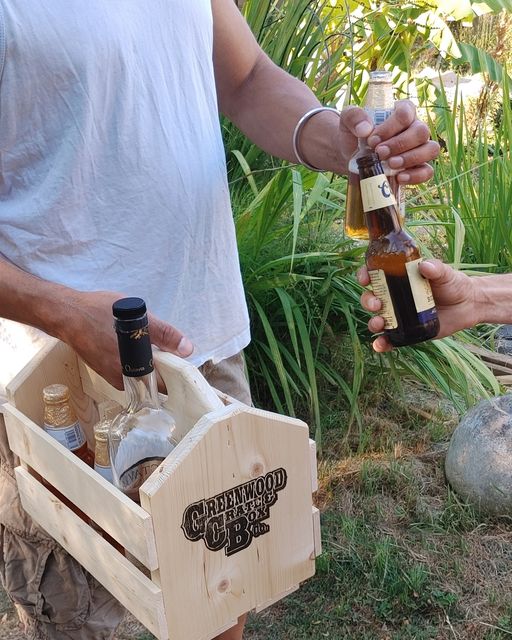
A crate can look ready for the counter while its underside tells a different story. Grit from a workshop floor, a rough bottom edge or a fastener point can mark a finished table before anyone notices. Before moving a small wooden display crate onto furniture, empty it and check the surfaces that will actually touch down.
Set the empty crate on a protected work surface where you can turn it safely. Use a bright light to inspect the bottom slats, lower edges and corners. Look for embedded grit, splinters, loose wood and projecting screw or nail points. Keep your fingers away from suspect spots rather than sweeping a bare hand across the underside to find them.
Brush away loose dust and grit with a clean, soft brush, then look again. If a fastener projects through the wood or a bottom slat is loose, keep the crate out of use until the cause has been assessed and repaired. A soft pad is not a repair for a sharp point, and hammering it flat can hide the problem instead of fixing it.
For an otherwise sound, unfinished bottom edge with a small rough patch, support the crate securely and smooth that patch lightly with a sanding block along the grain. Wear eye protection and suitable dust protection, and remove the sanding dust before checking again. Do not sand an unknown old coating or take material off a damaged joint just to make it feel smooth.
Try the empty crate on a clean, flat sacrificial board first. Check that it sits without rocking and that no hard projection contacts the board. Passing this check does not guarantee a delicate tabletop is safe: use a clean protective barrier suitable for that furniture finish, and check beneath it regularly because trapped grit can still scratch. Lift the crate to reposition it rather than sliding it.
Practical takeaway: make “empty, inspect, clean, test” the last step before a crate becomes a countertop display. Pay attention to the underside after transport or storage, not just when the crate is first finished. If you find damage rather than ordinary dust or roughness, stop and fix that before putting the crate back to work.
Crate CareRetail DisplaysSmall Repairs