
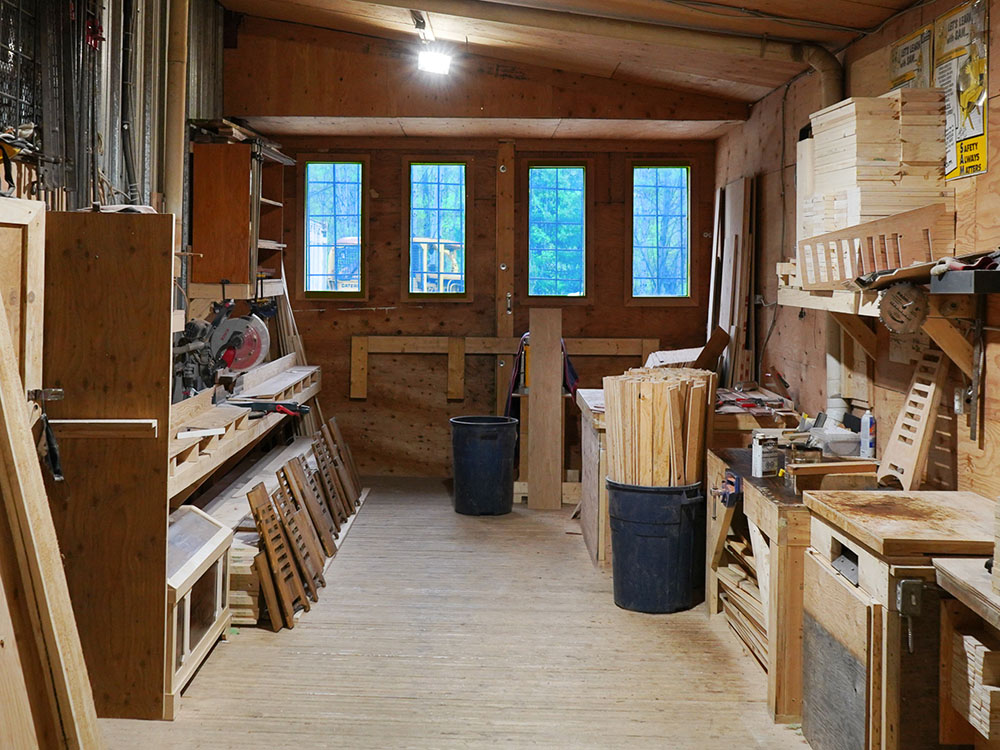
It is tempting to unload a fresh stack of boards and start cutting crate parts the same afternoon. The wood looks dry, the dimensions are printed on the tag, and the bench is clear. But lumber that just came off a truck, out of an unheated yard, or out of a damp shed is still carrying the temperature and moisture of wherever it was stored — and it will keep moving after the saw stops.
Wood constantly trades moisture with the air around it. A board that sat in a cold, damp lumberyard and lands in a warm, dry shop will shed moisture unevenly: the faces dry first, the core lags behind, and the piece can cup, bow or twist as it equalizes. Cut a slat to final size while that movement is still underway and the part can warp out of true a day later, after it is already fitted or fastened.
The fix is simple patience. Stack the new boards in the shop with airflow between layers — stickers, offcuts or even consistent strips of scrap — and leave them alone for a few days. A long weekend is a reasonable minimum for thin softwood parts; thicker or clearly damp stock deserves longer. The goal is to let every board reach the same moisture state as the air where the crates will be built.
Use the waiting time productively. Sort the stack for straightness, mark boards with loose knots or splits for rough cutting only, and chalk a rough cut list on the best faces. When the wood has settled, cut the longest and most visible parts first, so any board that still shows a surprise bend can be demoted to short corner blocks instead of ruining a full-length slat.
The same logic applies in reverse when finished crates head somewhere very different from the shop — a heated retail space after a cold storage room, for example. A crate built from well-settled wood handles those transitions far better than one rushed together from boards that were still finding their shape.
Practical takeaway: treat new lumber like a guest that needs to settle in. Sticker the stack, give it a few days in the shop, and cut the longest parts last-minute from the straightest boards — the crate that goes together calmly is the one that stays square.
Wood SelectionCrate BuildingShop Tips