
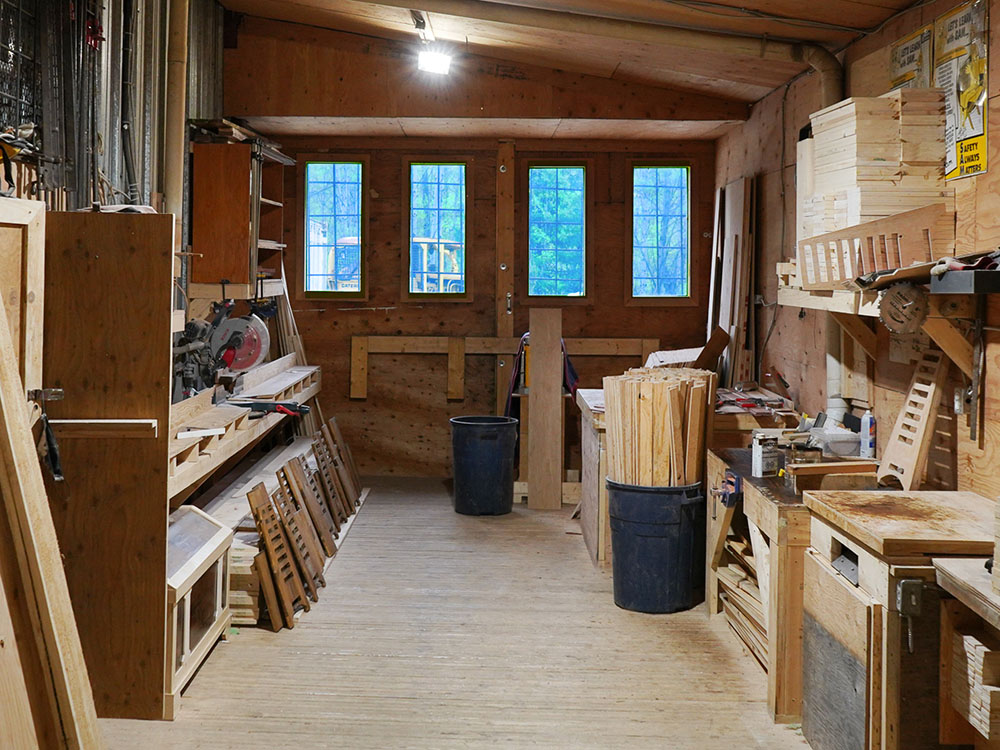
Every small wood shop has the same quiet problem: the pieces that are too good to throw away but too awkward to stack neatly. Left alone, offcuts become a leaning pile you have to move before every job.
A simple offcut bin works best when it sorts by how the wood will be used, not by perfect species or exact size. Keep one upright slot for long strips, one shallow tray for short blocks, and one small box for thin pieces that can become spacers, plugs or test cuts.
Put the bin close to the saw or bench, but give it a hard limit. When the long-strip slot is full, choose the straightest pieces and let the rest go. A full bin should trigger a decision, not become permission to start a second pile on the floor.
Mark the best pieces right away. A quick pencil note like “oak,” “dry,” “square edge” or “paint test” saves time later, especially when you are repairing a crate corner, making a jig, or checking a stain before it touches the real work.
The hidden benefit is pace. When small, reliable scraps are easy to grab, little shop tasks feel easier: shimming a clamp, testing a screw, blocking up a panel, or replacing a worn corner without cutting into fresh stock.
Practical takeaway: build the offcut bin around decisions. Sort long, short and thin pieces; label the useful ones; and empty the overflow before the scrap pile starts running the shop.
Shop OrganizationOffcutsSmall Shop