
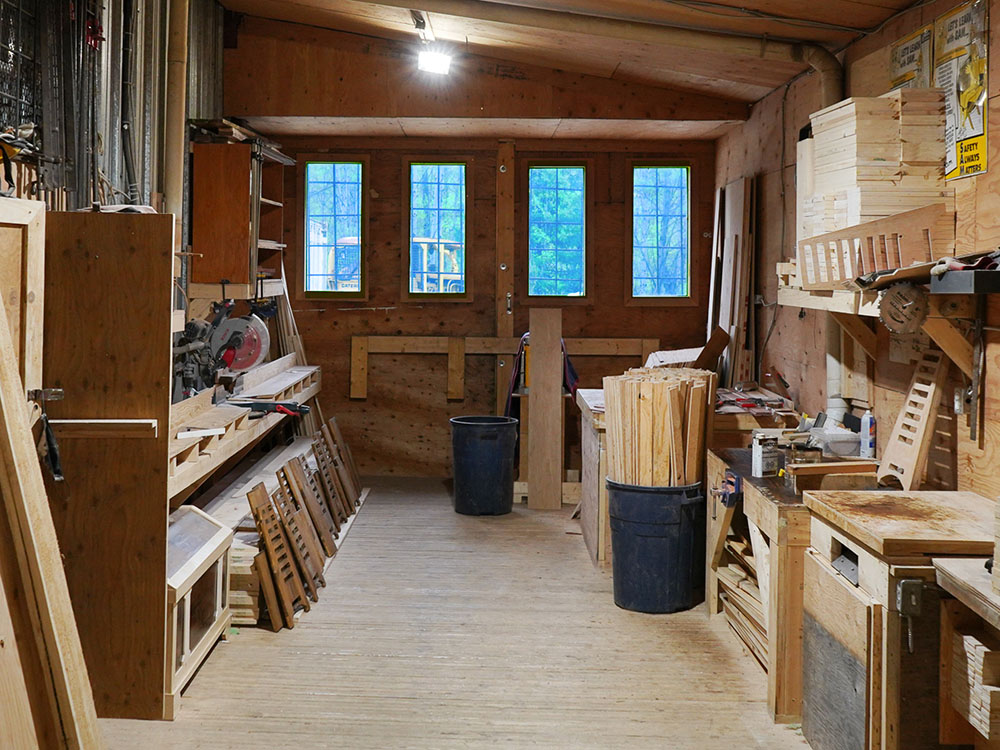
Crate repairs often start with confidence and then scatter into little pieces: two screws on the bench, a handle block near the saw, a wedge offcut by the glue bottle, and one washer hiding under a pencil.
A small parts tray is a low-tech way to keep the job together. It can be a shallow wooden offcut box, a baking tin, or any container with enough rim to stop hardware from rolling away while the crate is being checked.
Before loosening a handle or corner strip, set the tray beside the work and make it the only place loose parts are allowed to land. If a screw comes out, it goes in the tray. If a spacer is cut for testing, it goes in the tray. If a note needs to travel with the repair, tuck the note in the tray too.
The habit helps when a repair is interrupted. Instead of rebuilding the story from memory, the next person at the bench can see the parts, fasteners, and rough order of work in one small footprint.
For repeated crate work, it is worth keeping two or three trays labelled by job. A scrap of masking tape on the front is enough; the point is not fancy storage, it is preventing one project from borrowing pieces from another.
Practical takeaway: start every small crate repair by choosing a parts tray first. It adds about ten seconds at the beginning and can save a surprising amount of searching before final assembly.
Shop OrganizationCrate RepairsSmall Shop