
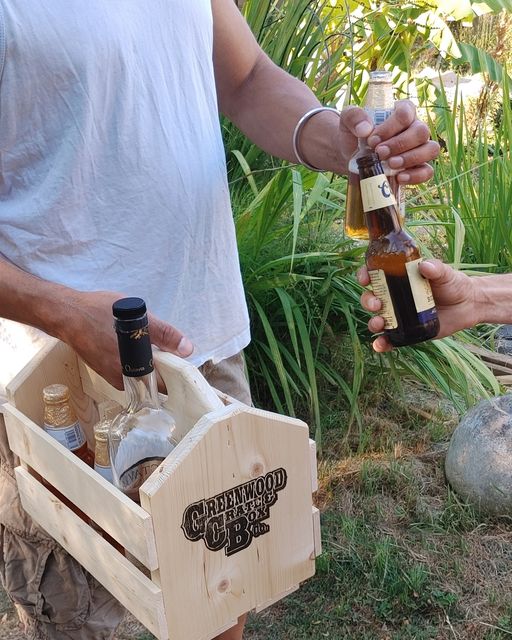
A wooden crate can make a counter, market table or tasting-room shelf feel warmer right away, but the crate should not have to do all the explaining by itself. A small story card beside the display helps people understand what they are looking at before anyone has to start a sales pitch.
Keep the card simple: one short headline, one useful detail and one next step. For example, a wine-crate display might point out the bottle count, the handle style or the branded front panel, then invite the shopper to ask about custom sizing. The goal is not a brochure. It is a quiet signpost.
Size matters. A tent card, clipped tag or small upright card is usually enough. If the sign is too large, it competes with the wood and product. If it is too small, people ignore it. Aim for a card that can be read from an arm’s length away while the crate still remains the centrepiece.
Use plain words instead of shop jargon. “Solid wooden crate for six bottles” is friendlier than a list of dimensions and fastener types. Save the deeper build details for a quote conversation, product sheet or website page where a buyer can compare options at their own pace.
For a handmade display, the card can also mention care in a grounded way: wipe with a dry cloth, avoid soaking, keep heavy loads balanced or bring it inside during wet weather. Those small notes help the piece feel useful after the first impression.
Practical takeaway: when you set a crate into a retail display, add one small story card. Tell people what the crate is for, what makes it useful and what to do next. The display will feel more intentional without making the shop look cluttered.
Retail DisplaysWooden CratesShop Tips