
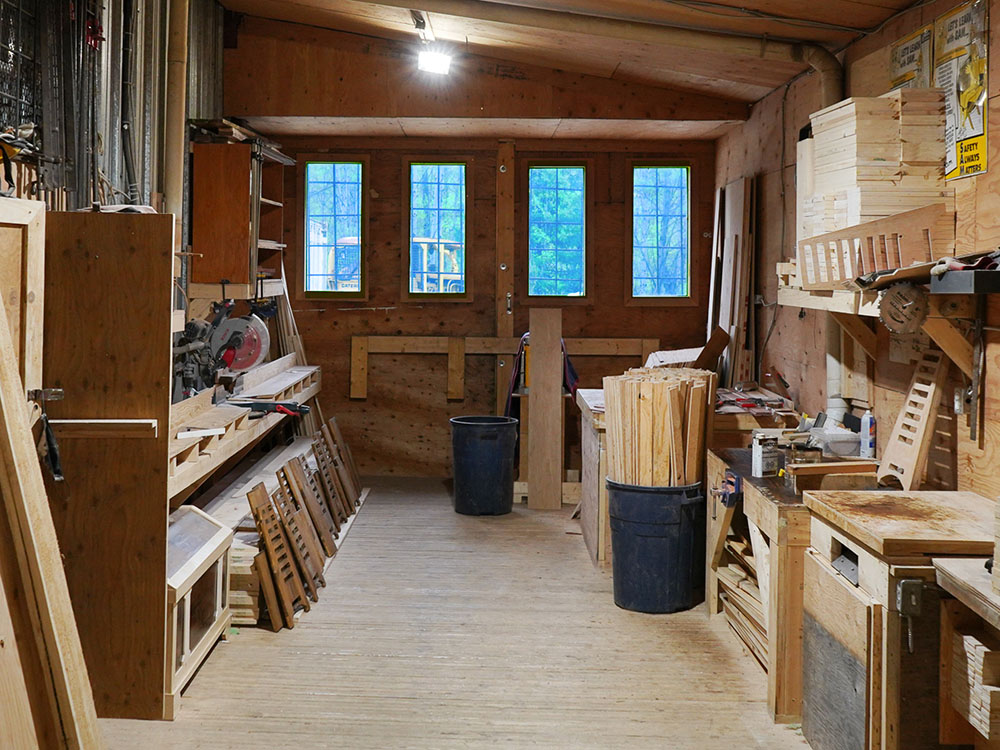
Small crate work often looks simple until the bench starts filling up. A few side slats, rails, screws, labels, offcuts and sanding blocks can become a confusing pile before the first box is even assembled.
A ten-minute bench reset is a useful way to start. Before cutting or fastening, clear one flat landing zone and put away anything that belongs to yesterday’s job. The goal is not a perfect shop; it is enough open space to see the parts for this batch.
Next, group the materials by job. Stack matching slats together, keep handle pieces in their own corner, and park hardware in a tray instead of loose on the bench. If several crates are being made or repaired, add a scrap-paper label for each group so the pieces do not trade places.
Use the reset to check one small thing before momentum takes over: screw length, divider spacing, label position or sanding grit. A single test on scrap can catch a mismatch while the fix is still easy.
The reset also creates a natural stopping point. If the phone rings or another order interrupts the work, the grouped parts tell you where to return. That matters in a small shop where the same bench may handle repairs, packing, finishing and paperwork in the same afternoon.
Practical takeaway: before the next small crate batch, spend ten minutes clearing one bench zone, grouping the parts and testing one detail. The batch will feel calmer, and the finished pieces are more likely to match.
Small ShopCrate MakingShop Organization