
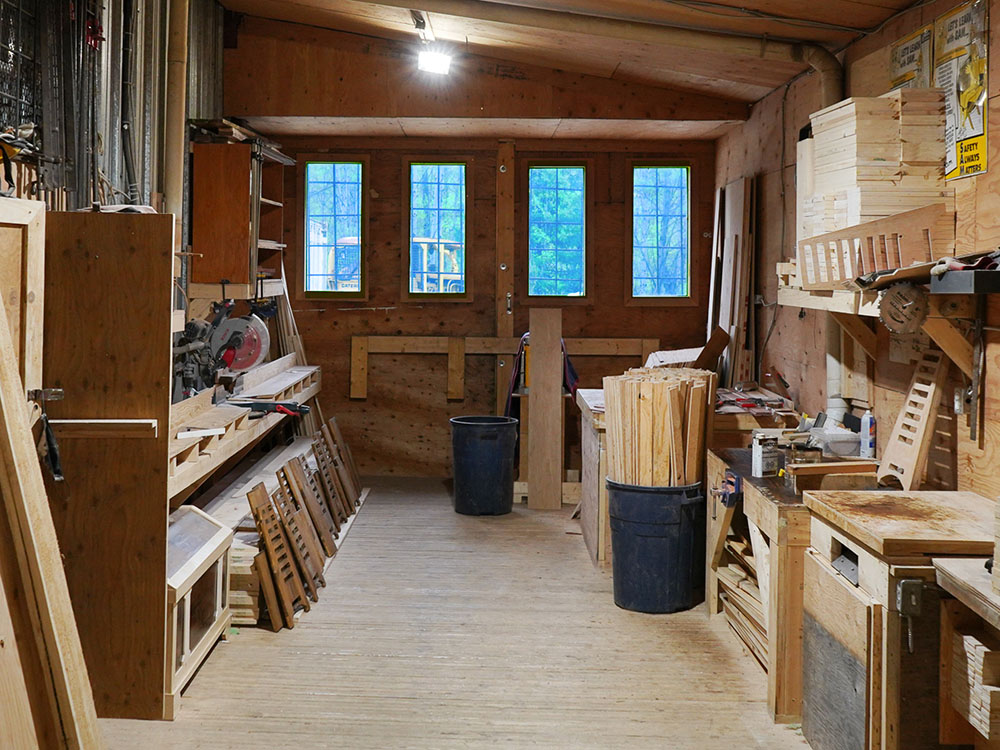
Small glue-ups have a way of spreading farther than expected. A dab meant for one loose crate corner can squeeze out onto the bench, catch a sanding scrap, or leave the repaired piece stuck down just when it should be checked for square.
A quick wax-paper pad keeps the job quieter. Tear off a piece a little larger than the repair area and set it under the corner, divider, handle block, or tray rail before the glue bottle opens. The paper does not need to be fancy; it just needs to cover the spot where squeeze-out is likely to land.
The habit works best when the paper is flat and the work is still supported by solid bench underneath. If the part needs clamping, keep the clamp pads on wood, not on a loose wrinkle of paper. For small repairs, tape one edge of the paper to the bench so it does not slide while the piece is being nudged into place.
After clamping, use a damp rag or a scrap stick to clean the glue line while it is still soft. The wax paper catches the extra mess, and the piece can usually lift free after the glue has set enough to move. If the paper tears, peel it away gently rather than sanding through a gummy patch.
This is also useful for batch work. A few small wax-paper pads beside the bench can separate freshly glued label blocks, crate feet, or sample pieces without turning the whole workspace into a drying rack.
Practical takeaway: before a small crate repair or tray glue-up starts, put one wax-paper pad under the work so the cleanup stays on the paper instead of on the bench or the finished face.
Glue UpsShop TipsCrate Repairs